
Amber glasses are a temporary patch for a systemic problem; the real biohack is reprogramming your child’s 24-hour light environment to optimize their natural sleep hormones.
- Morning sunlight is a more powerful sleep regulator than any evening intervention.
- A child’s biology is twice as sensitive to evening light, making environmental control non-negotiable.
Recommendation: Shift your focus from blocking blue light at night to strategically managing light exposure—from intense morning sun to dim evening warmth—throughout the entire day.
As a tech-savvy parent, you’re likely aware of the digital elephant in the room: screen time. You’ve heard the warnings, seen the blue-light filtering features on devices, and perhaps even invested in a pair of amber glasses for your child. The logic seems simple: screens emit blue light, blue light disrupts sleep, so blocking it should solve the problem. This has led many to believe that a simple accessory is the key to peaceful bedtimes and well-rested kids.
While these tools have their place, they are often a band-aid on a much deeper issue. Focusing solely on amber glasses is like trying to fix a leaky dam with a piece of tape. The real challenge, and the greatest opportunity, lies not in blocking a single light source for an hour or two, but in understanding and orchestrating your child’s entire light environment. The true secret to regulating their sleep hormones is not a product you buy; it’s a protocol you implement. It’s about becoming a biohacker for your own family.
But what if the key wasn’t just about avoiding the “bad” light at night, but about actively seeking the “good” light in the morning? This guide moves beyond the simple fix of amber glasses to reveal a more holistic and powerful system. We’ll explore how you can use environmental signals—light, darkness, and even food—to program your child’s internal clock for optimal sleep, mood, and cognitive function. This is about taking control of the inputs to get the biological outputs you want: a naturally sleepy, happy, and thriving child.
This article will guide you through the evidence-based protocols for mastering your child’s sleep cycle. We will deconstruct the daily rhythm, from the critical importance of a screen cutoff to the surprising power of morning sun, providing a complete blueprint for your family’s light hygiene.
Summary: Amber Glasses for Kids: A Biohacker’s Guide to Mastering Sleep Hormones
- Why 2 Hours Before Bed Is the Non-Negotiable Screen Cutoff?
- Morning Sun: Why 10 Minutes Outside Resets Your Child’s Sleep Clock?
- Gummies vs. Nature: Is Long-Term Melatonin Safe for Developing Brains?
- Blackout Curtains: Are They Necessary for Nap Time in Summer?
- Cherries and Bananas: Which Bedtime Snacks Naturally Boost Sleep?
- Dimming the House: At What Hour Should Overhead Lights Go Off?
- Alarm Clock vs. Sunlight: Which Wake-Up Method Reduces Morning Anxiety?
- Why Naps Are Crucial for Learning New Vocabulary in Toddlers?
Why 2 Hours Before Bed Is the Non-Negotiable Screen Cutoff?
The two-hour window before bed is not an arbitrary rule; it’s a biological necessity rooted in hormonal signaling. Exposure to light, particularly the blue spectrum emitted by screens, directly communicates with a master clock in the brain called the suprachiasmatic nucleus (SCN). When the SCN detects blue light, it sends a clear signal: “It’s daytime! Stay awake and alert!” This command immediately halts the production of melatonin, the hormone that signals to the body that it’s time to sleep.
For children, this effect is dramatically amplified. Their developing eyes have larger pupils and clearer lenses, allowing more light to penetrate to the retina. The impact is so significant that research shows evening light exposure suppressed melatonin twice as much in children compared to adults. This makes them uniquely vulnerable to the sleep-disrupting effects of evening screen time. An hour of tablet use before bed can be enough to delay their melatonin surge by several hours, pushing their natural sleep window later and later.
Amber glasses can filter some of this light, but they don’t address the stimulating nature of the content or the ambient light in the room. The most effective protocol is a complete cessation of screen-based activity. Recent science backs this up; a 2024 randomized clinical trial published in JAMA Pediatrics found that eliminating screen time before a toddler’s bedtime was not only feasible for parents but also had beneficial effects on sleep. Implementing this cutoff is the single most powerful lever you can pull to protect your child’s natural melatonin production.
Morning Sun: Why 10 Minutes Outside Resets Your Child’s Sleep Clock?
While evening darkness is crucial for initiating sleep, the foundation for a good night is actually laid the moment your child wakes up. The most powerful signal for programming the circadian rhythm is bright, natural sunlight. As sleep medicine physician Dr. Funke Afolabi-Brown explains, this environmental cue is paramount. In an article for Sleep.com, she states:
Light is the strongest cue for our circadian rhythm (internal clock)
– Dr. Funke Afolabi-Brown, Sleep.com
When sunlight hits the retina in the morning, it triggers a cascade of hormonal events. It shuts down any lingering melatonin and initiates a healthy spike in cortisol, the hormone that promotes wakefulness and alertness. This “anchors” the start of their biological day. Just 10 to 15 minutes of outdoor light exposure within the first hour of waking is enough to send a powerful signal that sets their internal clock ticking accurately. This morning light exposure essentially starts a countdown timer that dictates when melatonin will begin to rise again 12-14 hours later.
The intensity of outdoor light, even on a cloudy day, is exponentially greater than indoor lighting. By taking your child outside for a short walk, having breakfast on a patio, or simply playing by a bright window, you are providing a clear, unambiguous “good morning” signal to every cell in their body. This single habit is more effective at ensuring a timely release of melatonin in the evening than almost any nighttime intervention.
Your 5-Step Light Hygiene Audit
- Identify Contact Points: List all sources of artificial light your child is exposed to in the 2 hours before bed (overhead lights, lamps, tablets, TV, nightlights).
- Collect Morning Data: Inventory your current morning light environment. Are curtains opened immediately upon waking? Are lights turned on to full brightness to signal ‘day’?
- Check for Coherence: Compare your indoor light schedule to the sun. Does your home environment mimic the natural dusk (dimming) and dawn (brightening) cycles?
- Evaluate Light Temperature: Assess the ‘color temperature’ of your evening lights. Are they harsh, blue-white (signaling day) or warm, amber/red (signaling night)?
- Create an Integration Plan: Design a replacement strategy. Prioritize swapping evening bulbs for warm-toned smart bulbs and establishing a firm ‘lights out’ time for all screens and overheads.
Gummies vs. Nature: Is Long-Term Melatonin Safe for Developing Brains?
When bedtime becomes a battle, the allure of a melatonin gummy can be powerful for exhausted parents. Marketed as a natural sleep aid, these supplements have become increasingly popular. However, from a biohacking perspective, introducing an external hormone—especially in a developing child—is a significant intervention that should not be taken lightly. Melatonin is not a simple vitamin; it’s a powerful hormone that plays a role in regulating not just sleep, but also pubertal timing and other developmental processes.
The primary concern with long-term use is the potential for the body to down-regulate its own natural production. If the brain senses that melatonin is being provided externally, it may reduce its own output, potentially creating a dependency. Furthermore, the supplement industry is notoriously under-regulated. Studies have found that the actual dosage in over-the-counter melatonin products can vary wildly from what’s listed on the label, and some even contain other substances like serotonin.
Instead of outsourcing hormone production to a gummy, the biohacker’s approach is to optimize the body’s innate ability to produce melatonin at the right time. The strategies discussed throughout this guide—intense morning light, a strict evening screen cutoff, dim and warm lighting at night—are all designed to do just that. They provide the natural environmental signals the body needs to manufacture and release its own perfect dose of melatonin. This empowers your child’s biology rather than overriding it, promoting a resilient and self-regulating sleep system for the long term.
Blackout Curtains: Are They Necessary for Nap Time in Summer?
The power of darkness as a sleep signal is not limited to nighttime. For toddlers and young children who still nap, creating a dark environment during the day is a crucial tool for promoting restorative sleep, especially during the long, bright days of summer. When the sun is high in the sky at 1 p.m., a child’s brain is receiving a powerful “stay awake” signal. Blackout curtains are the most effective way to counteract this and create an artificial “night” that encourages sleep.
These curtains work by physically blocking the vast majority of external light, helping to trigger a small, timely release of melatonin appropriate for a nap. This not only helps the child fall asleep faster but also improves the quality of that sleep. A nap in a brightly lit room is often shorter and less restorative, as the body is fighting the environmental cues to be awake. A dark, cave-like environment signals to the brain that it’s safe and appropriate to power down for a deeper sleep cycle.
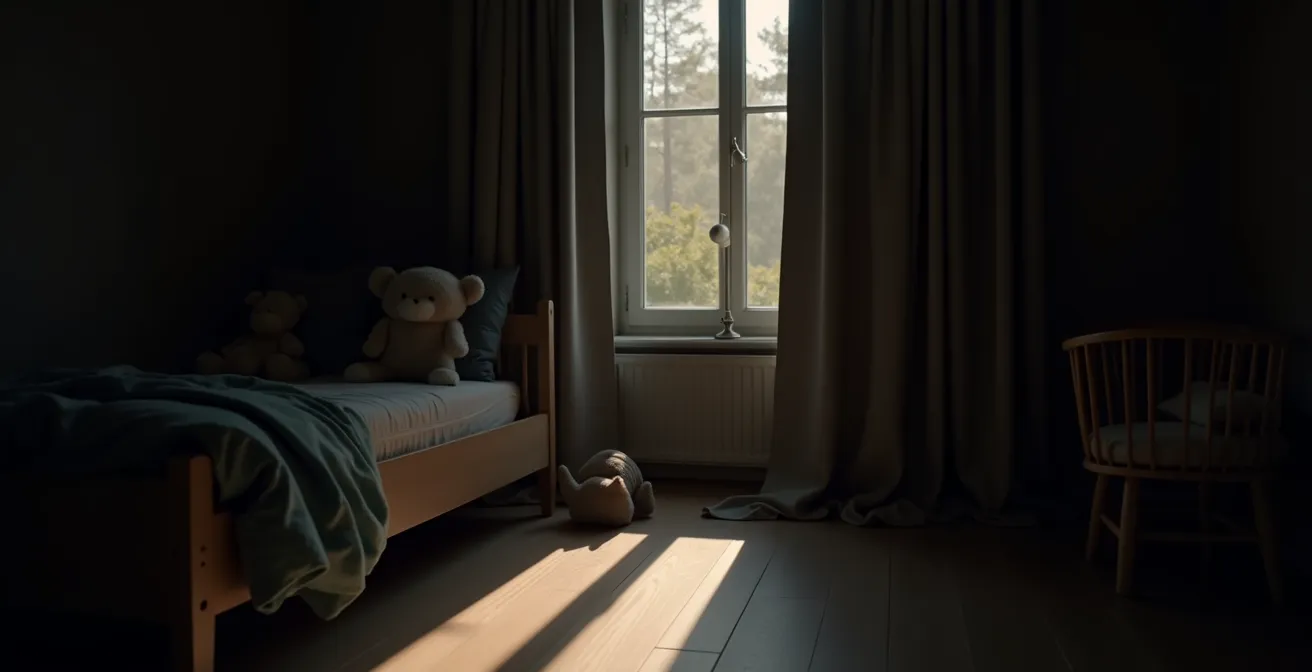
As you can see in the image, the goal is to create a stark contrast with the outside world. This deep darkness helps consolidate sleep, which is particularly important for learning and memory (as we’ll see later). While not every child needs an absolutely pitch-black room, for those sensitive to light or struggling with naps during bright seasons, blackout curtains are a non-negotiable environmental hack. They are a simple, passive way to provide the powerful biological signal of darkness precisely when it’s needed.
Cherries and Bananas: Which Bedtime Snacks Naturally Boost Sleep?
Beyond light, another powerful environmental signal you can control is nutrition. The concept of “chrono-nutrition” involves timing your food intake to support your body’s circadian rhythms, and a small, strategic bedtime snack can be an effective part of your child’s sleep protocol. The key is choosing foods that provide the building blocks for sleep-promoting neurotransmitters and hormones without spiking blood sugar.
Two of the best choices are tart cherries and bananas. Tart cherries are one of the few natural food sources of melatonin. While the amount is small, consuming them can provide a gentle nudge towards sleep. Bananas, on the other hand, are rich in two crucial minerals: potassium and magnesium. Both act as natural muscle relaxants, helping to calm the body and prepare it for rest. Bananas also contain tryptophan, an amino acid that the body converts into serotonin (a mood-regulating neurotransmitter) and then into melatonin.

A small snack like half a banana with a few tart cherries about 60-90 minutes before bed can be an excellent addition to the wind-down routine. It’s important to keep the snack small and low in sugar to avoid a stimulating effect. The goal is not to fill the stomach but to provide the specific micronutrients that support the body’s natural transition into a state of rest and repair. This is a simple, delicious way to send one final “it’s time to wind down” signal to your child’s brain.
Dimming the House: At What Hour Should Overhead Lights Go Off?
The two-hour screen cutoff is the first step, but it’s ineffective if your child simply moves from a bright tablet to a room illuminated by bright overhead lights. The SCN in the brain doesn’t distinguish between blue light from a screen and blue light from a “daylight” LED bulb. To your child’s biology, bright light is bright light, and it all signals “daytime.” This is where the concept of comprehensive light hygiene comes into play. You must dim the entire house, not just the screens.
The ideal protocol is to align your home’s lighting with the setting of the sun. As dusk begins outside, your indoor environment should follow suit. A practical rule is to turn off all bright, overhead lights at the same time you enforce the screen cutoff—two hours before your child’s bedtime. This signals a clear phase shift to the brain, allowing the melatonin production process to begin on schedule.
In place of harsh overhead lights, switch to low-level, warm-toned light sources. This means using dim table lamps, floor lamps, or salt lamps. The key is both intensity and color. The light should be dim enough that you could comfortably fall asleep, and the color should be in the red or amber part of the spectrum, which has been shown to have a minimal impact on melatonin. Swapping your standard evening bulbs for “warm white” or, even better, amber-colored smart bulbs that can be programmed to dim and warm up in the evening is a game-changing biohack for the entire family.
Alarm Clock vs. Sunlight: Which Wake-Up Method Reduces Morning Anxiety?
Just as the evening wind-down is critical, the morning wake-up process sets the tone for the entire day. The traditional blaring alarm clock is one of the most jarring ways to start the day, for adults and children alike. It rips the brain out of a sleep cycle, often inducing a significant spike in cortisol and adrenaline—the body’s primary stress hormones. This “fight-or-flight” response can lead to feelings of grogginess, irritability, and anxiety that persist long after the alarm is silenced.
A far more biologically-aligned approach is to wake with light. This method mimics the natural sunrise, providing a gentle and gradual signal for the body to transition from sleep to wakefulness. A sunrise simulation alarm clock, which slowly brightens over 30 minutes, is an excellent tool. It gradually suppresses melatonin and stimulates the body’s natural Cortisol Awakening Response (CAR). A healthy CAR is a gentle rise in cortisol that peaks about 30-45 minutes after waking, promoting energy and alertness without the anxiety-inducing jolt of an audible alarm.
The free alternative is simply using natural sunlight. By leaving a small gap in your child’s curtains, the morning light can enter the room and serve the same function. Waking up to a progressively brightening room allows the body to complete its sleep cycle and wake up at the most natural point. This gentle, light-based approach reduces morning stress, improves mood, and reinforces the strong circadian rhythm you established with morning sun exposure the previous day, completing the 24-hour cycle of optimal light hygiene.
Key Takeaways
- A child’s sleep is not fixed at bedtime; it’s programmed by light exposure over a full 24-hour cycle.
- Morning sunlight is the most critical input for setting the body’s internal clock and ensuring timely melatonin release at night.
- The goal is not to supplement with external hormones, but to create an environment that optimizes the body’s own natural production.
Why Naps Are Crucial for Learning New Vocabulary in Toddlers?
The effort of orchestrating your child’s sleep environment pays dividends far beyond eliminating bedtime battles. Quality sleep, including naps, is directly linked to cognitive performance, particularly memory and learning. For toddlers, whose brains are rapidly acquiring language, naps function as a biological “save button” for new information. During this period of intense vocabulary explosion, sleep is when the brain actively processes and consolidates newly learned words.
Studies on sleep-dependent memory consolidation have shown that the brain replays and strengthens neural connections made during waking hours. When a toddler learns a new word, it is initially stored in a temporary, fragile memory state. A restorative nap allows the brain to transfer this information to more permanent, long-term storage. Without that nap, many of those newly learned words can be lost. This is why a child who skips a nap may not only be cranky but may also show a measurable deficit in their ability to recall new words learned that morning.
Therefore, protecting nap time with tools like blackout curtains is not just about managing behavior; it’s a critical academic intervention. By creating an environment conducive to deep, restorative sleep during the day, you are providing the essential downtime their brain needs to hardwire new knowledge. Mastering your child’s sleep is fundamentally about optimizing their capacity to learn. A well-rested child is not just a happier child, but a more capable and efficient learner.
By implementing these evidence-based protocols, you are moving beyond simple fixes and becoming the architect of your child’s biological well-being. This is about using nature’s own signals to build a resilient, healthy, and high-performing sleep system that will serve them for a lifetime.