Education and benchmarks
Every parent faces moments of uncertainty when trying to gauge whether their child is progressing appropriately in school. Is she reading at the right level for her age? Should you be concerned about those standardized test scores? How do you know if the classroom environment truly supports your child’s unique learning style? These questions reflect the natural tension between wanting children to meet important developmental milestones while honoring their individual pace and strengths.
Educational benchmarks serve as valuable reference points rather than rigid standards. They help parents and educators identify where additional support might be needed, celebrate genuine progress, and make informed decisions about learning approaches. Yet understanding which metrics truly matter, how to interpret assessment data, and when to advocate for different strategies requires navigating a complex landscape of pedagogical approaches, testing methods, and developmental science. This comprehensive look at education and benchmarks equips you with the knowledge to support your child’s academic journey with both confidence and flexibility.
Understanding Educational Benchmarks and Why They Matter
Educational benchmarks represent expected learning milestones at specific ages or grade levels, derived from decades of research on child development and academic progression. They provide a framework for understanding whether children are acquiring foundational skills in core areas like literacy, mathematics, and critical thinking at a pace that prepares them for future learning.
These benchmarks serve multiple practical purposes. Teachers use them to design curriculum and identify students who might benefit from intervention or enrichment. Schools rely on them to evaluate program effectiveness and allocate resources. For parents, benchmarks offer reassurance when children are progressing typically and clarity about when to seek additional support.
However, benchmarks have important limitations. They describe average development across large populations, meaning significant variation remains completely normal. A child who learns to read fluently at age seven rather than six isn’t necessarily behind in any meaningful sense, just as an early reader isn’t guaranteed long-term academic advantages. Context matters enormously: the benchmarks themselves vary across different educational systems, reflecting cultural values and pedagogical philosophies rather than universal truths.
The key is using benchmarks as informative reference points rather than anxiety-inducing absolutes. When your child’s progress diverges from typical timelines, it signals a need for closer observation and potentially different approaches—not panic or labels. Understanding this balanced perspective helps you interpret the various assessments and reports that punctuate your child’s educational journey.
Choosing the Right Educational Environment
The educational setting profoundly influences how children learn and develop. Selecting the right environment involves evaluating multiple factors beyond academic reputation alone.
Comparing Pedagogical Approaches
Different schools embrace distinct educational philosophies. Traditional approaches emphasize structured curriculum, direct instruction, and sequential skill-building. Progressive or constructivist methods prioritize student-directed exploration, project-based learning, and interdisciplinary connections. Montessori, Waldorf, and Reggio Emilia represent alternative frameworks with specific principles about child development and learning.
No single approach is universally superior. The question is which philosophy aligns with your child’s temperament, learning preferences, and your family values. Some children thrive with clear structure and explicit instruction; others flourish when given autonomy to pursue interests deeply.
Evaluating Practical Factors
Beyond philosophy, practical elements significantly impact daily experience. Class size affects the individual attention teachers can provide—smaller classes generally allow more personalized support, though skilled teachers can create effective learning environments even with larger groups. School culture encompasses how the community handles conflict, celebrates diversity, supports social-emotional development, and balances academic rigor with childhood joy.
For children with learning differences or special needs, evaluating how schools accommodate diverse learners becomes essential. Effective communication channels with teachers, responsiveness to parent concerns, and willingness to differentiate instruction all signal whether a school can truly partner with families in supporting each child’s growth.
Personalized Learning: Adapting to Individual Needs
Children learn at different paces and in different ways. Truly effective education recognizes this diversity and adapts accordingly.
Understanding Individual Learning Differences
While popular “learning styles” theories (visual, auditory, kinesthetic) lack scientific support, genuine cognitive differences do exist. Some children process information quickly but superficially; others need more time but develop deeper understanding. Some excel at memorization; others at conceptual reasoning. Recognizing your child’s particular cognitive profile helps you advocate for appropriate challenges and supports.
The goal isn’t matching instruction to a fixed “style” but rather offering multiple pathways to understanding. When children struggle with one approach, effective educators try different explanations, representations, or practice methods until something clicks.
Balancing Pace with Proficiency
Rushing through curriculum to keep pace with benchmarks or peers often creates gaps in understanding that compound over time. Conversely, holding back children who grasp concepts quickly can foster boredom and disengagement. The sweet spot involves ensuring genuine mastery of foundational skills while allowing advancement when appropriate.
Technology increasingly enables personalization through adaptive programs that adjust difficulty based on performance. At home, parents can supplement school curriculum by providing enrichment in strength areas or additional practice where needed. In the classroom, advocating for differentiation—offering varied activities at different complexity levels—ensures each child works in their zone of productive challenge.
Reading Development: From Decoding to Comprehension
Reading ability forms the foundation for virtually all academic learning, making literacy development a primary focus of educational benchmarks.
Understanding Reading Progression
Reading development typically unfolds in stages. Early readers focus on phonemic awareness and decoding—connecting letters to sounds and blending them into words. As decoding becomes automatic, attention shifts to fluency, then comprehension, and ultimately critical analysis. Understanding this progression helps parents interpret reading levels and assessment data meaningfully.
Reading levels (often designated by letters or numbers) indicate text complexity a child can handle independently. These levels should progress throughout the year, but the pace varies considerably. The critical question isn’t whether your child matches a specific benchmark, but whether they’re making consistent growth and developing genuine comprehension alongside mechanical reading skills.
Building Comprehension Skills
Moving beyond simply pronouncing words to actually understanding meaning requires specific skills. Developing inference abilities—reading between the lines to grasp implicit information—separates superficial from deep readers. Discussing plot points, character motivations, and story themes builds analytical thinking. Visualizing narratives strengthens memory and engagement.
Non-fiction texts require different comprehension strategies than stories. Understanding text structures like compare-contrast, cause-effect, or problem-solution helps children extract information efficiently. Balancing reading speed with accuracy ensures fluency doesn’t come at comprehension’s expense.
Preventing Summer Learning Loss
The “summer slide” in literacy is well-documented: without regular reading practice, children often lose ground during long breaks. Simple strategies like maintaining daily reading habits, visiting libraries, and discussing books together can preserve and even extend progress made during the school year.
Monitoring Academic Progress Effectively
Report cards and standardized tests provide periodic snapshots of academic progress, but interpreting them wisely requires understanding what they actually measure and what they miss.
Between formal reports, ongoing monitoring helps you notice both progress and potential concerns early. Changes in homework completion, attitude toward school, or confidence in specific subjects often signal important shifts. Regular, low-pressure conversations about what your child is learning reveal far more than grades alone.
Standardized tests measure specific skills at a particular moment under particular conditions. Test anxiety can significantly depress scores for capable students, meaning results don’t always reflect true knowledge. Understanding this helps prevent over-interpreting a single disappointing performance. Conversely, identifying legitimate red flags—consistent struggles across multiple assessments, growing gaps between effort and achievement, or regression in previously mastered skills—signals the need for deeper investigation.
The most useful approach combines multiple data sources: teacher observations, classwork samples, formal assessments, and your own knowledge of your child. Patterns across these various inputs provide much clearer pictures than any single metric.
Learning Through Doing: Hands-On Education
While traditional benchmarks often emphasize knowledge acquisition and test performance, increasingly educators recognize that active, applied learning produces deeper understanding and better retention.
The Power of Project-Based Learning
When children investigate real questions, build actual prototypes, or solve authentic problems, they engage multiple cognitive processes simultaneously. Project-based learning naturally integrates skills from various disciplines while fostering creativity, persistence, and critical thinking that standardized tests struggle to measure.
Science fair investigations exemplify this approach. Formulating open-ended questions, designing experiments, documenting processes, and analyzing results builds research skills while making scientific concepts tangible. The process of discovery—including failures and iterations—teaches more than any textbook explanation.
Applied Learning at Home
Parents can extend hands-on learning beyond classroom projects. Applying scientific concepts to household problems—why does bread rise? how do levers work?—connects abstract principles to concrete experience. Building structures reveals physics through experimentation: testing material strength, discovering why triangular bracing provides more stability than squares, understanding load distribution through trial and error.
The crucial element isn’t initial success but iteration. When a prototype fails, the opportunity for learning multiplies. Understanding physics through failure and refinement develops resilience and problem-solving skills that serve children far beyond any particular academic benchmark. Early exposure to sequencing and logical thinking—whether through coding concepts, recipe following, or construction projects—builds foundational reasoning abilities.
Education and benchmarks serve as tools for supporting children’s development, not rigid standards for judgment. By understanding what various assessments actually measure, choosing educational environments aligned with your child’s needs, personalizing learning approaches, developing strong literacy skills, monitoring progress thoughtfully, and incorporating hands-on exploration, you create conditions for genuine growth. The goal isn’t perfect alignment with every milestone, but rather nurturing curious, capable learners who develop both competence and confidence. When you approach benchmarks with this balanced perspective—informed but not anxious, attentive but flexible—you empower yourself to advocate effectively and support your child’s unique educational journey.
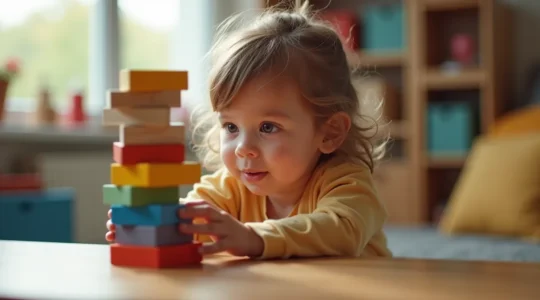
Towers That Fall: How to Teach Gravity and Balance to a 4-Year-Old?
The key to teaching physics isn’t explaining abstract concepts; it’s reframing every toppled tower from a “failure” into a “data point.” Building activities are simple experiments that reveal invisible forces like gravity and compression. Focusing on hands-on exploration and guided…
Read more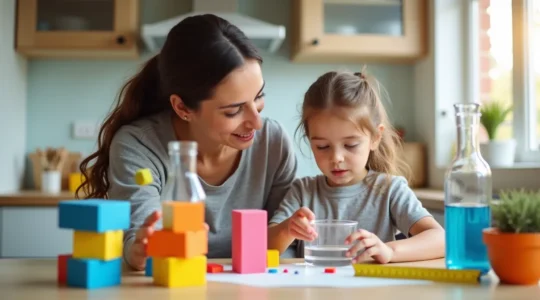
How to Solve Household Problems Using STEM Logic with Your 8-Year-Old?
Stop thinking of STEM as school subjects; the real goal is to teach your child to think like a practical engineer at home. The most valuable lesson isn’t finding the right answer, but mastering the process: defining a problem, prototyping…
Read more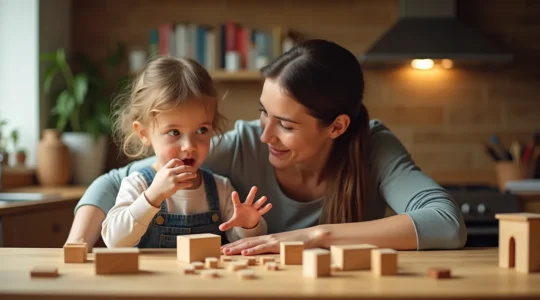
Beyond “Because I Said So”: A Parent’s Guide to Fostering Curiosity and Lifelong Learning
The endless stream of “why?” from a child can feel exhausting. But what if the solution isn’t to have all the answers, but to change your role entirely? This guide reframes the parent from a reactive answer-provider to a proactive…
Read more
Reading Robots: How to Stop Your Child From Sounding Like Siri?
Expressive reading isn’t about practicing different voices; it’s the natural result of a child truly understanding and picturing the story. Robotic reading is often a symptom of ‘surface-level’ decoding, not a lack of effort or talent. Strategies that build an…
Read more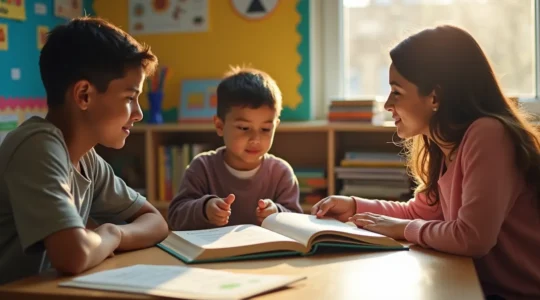
Translating Teacher Jargon: What Does “Level J” Actually Mean for Your Child?
In summary: Reading levels like “Level J” are not a final grade but a snapshot of specific skills your child is developing, such as decoding multi-syllable words and understanding complex plots. A drop in reading scores, especially in 3rd grade,…
Read more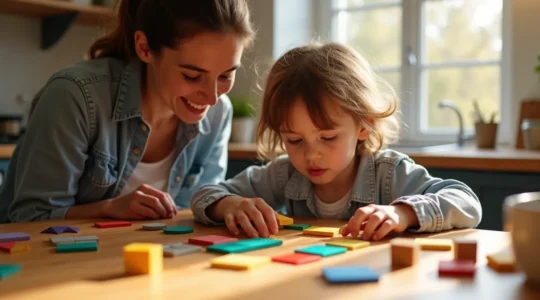
One Size Does Not Fit All: Why Your Child Hates Math (and How to Fix It)?
Your child doesn’t hate math; they hate feeling misunderstood by a rigid system. The solution isn’t more drills, but decoding their unique mathematical thinking profile. The popular “learning styles” theory is a myth. Instead, children process math through distinct cognitive…
Read more
Public vs. Private vs. Charter: Which School Culture Fits Your Child?
Choosing between Public, Private, or Charter schools is a flawed approach; the label matters far less than the school’s specific ‘operational culture’. How a school manages class dynamics, communicates with parents, and supports individual learning needs are better predictors of…
Read more