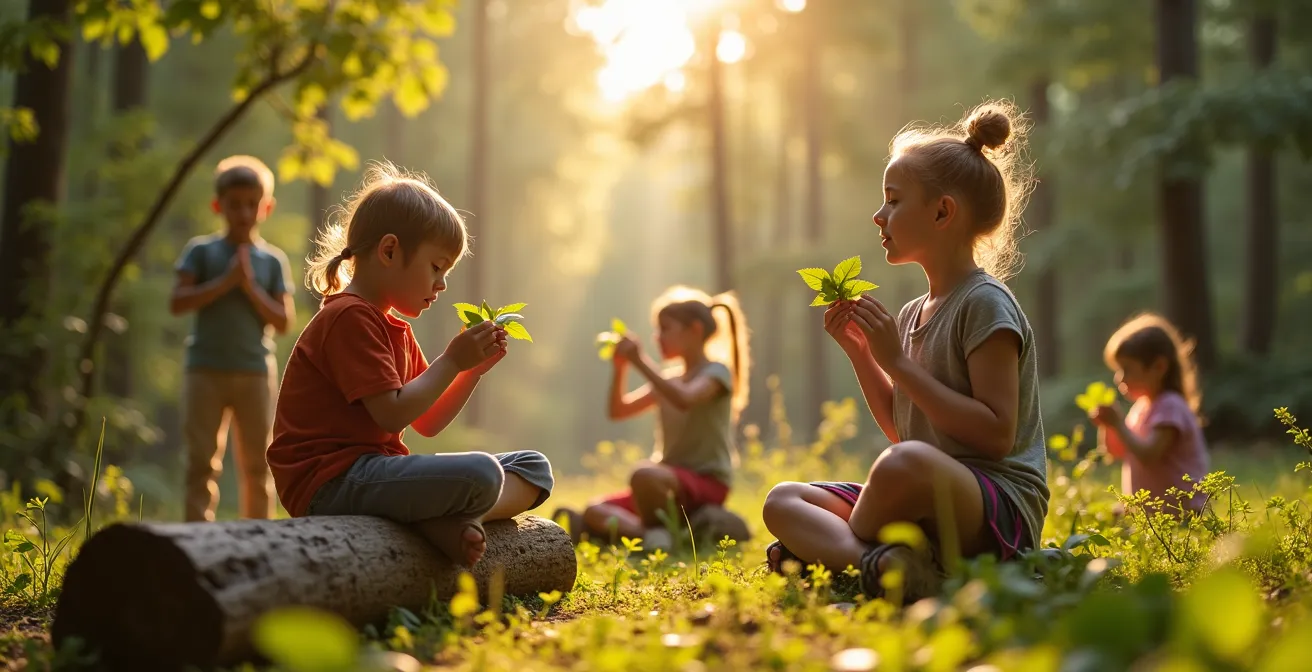
Contrary to popular belief, simply telling a child with ADHD to “go outside” is not enough; the key is using specific, timed nature interactions that act as a physiological prescription for their nervous system.
- Morning sunlight physically resets the body’s sleep and focus clock (circadian rhythm).
- Barefoot contact with the earth (grounding) can measurably reduce inflammation linked to ADHD symptoms.
- Unstructured time in nature restores the brain’s “directed attention” in a way screen time cannot.
Recommendation: Begin with the simplest prescription: ensure your child gets 10 minutes of direct, unfiltered morning sunlight within the first hour of waking.
As a parent, watching your child struggle with focus, anxiety, or hyperactivity is a deeply challenging experience. You’ve likely heard the well-meaning advice a hundred times: “reduce screen time” and “get them outside more.” While these suggestions hold a kernel of truth, they often feel too vague to be truly helpful. They scratch the surface of a profound connection between our children’s well-being and the natural world, a connection that modern, urban life has frayed.
The standard conversation about this topic often stops at treating nature as a simple playground or a distraction. But what if we approached it with more intention? What if we saw nature not just as a place to be, but as an active therapeutic partner? The science is increasingly clear: the disconnect from the natural world is not just a philosophical problem; it has real, measurable physiological consequences, particularly for the developing brains of children prone to attention and anxiety issues. These issues are on the rise, with recent CDC data revealing that anxiety disorders increased significantly among children and adolescents, especially in urban areas.
This article moves beyond the platitudes. We will explore the evidence-based concept of the “Nature Prescription”—a framework for using specific, targeted doses of nature to directly address the biological underpinnings of inattention and emotional dysregulation. We’re not talking about vague encouragement to “go play.” We’re talking about using morning light to reset a child’s sleep clock, barefoot walking to calm systemic inflammation, and “soft fascination” to restore a burnt-out mind. This is about understanding the *why* behind the what, empowering you to craft a sustainable, non-medical intervention that honors your child’s innate need for the wild.
In the following sections, we will break down the science and provide practical, actionable strategies. You will discover why city life can heighten anxiety, how to use movement-based meditation in the woods, and why allowing for “bad weather” emotions is crucial for building resilience. Get ready to learn how to become your child’s nature therapist.
Summary: A Parent’s Guide to Nature Prescriptions for ADHD
- Why Kids in Cities Are More Prone to Anxiety?
- Barefoot Walking: How Earthing Reduces Inflammation in Kids?
- Gratitude or Meditation: Which Practice Suits a Hyperactive Child?
- The “Good Vibes Only” Risk: Why You Must Allow Sadness?
- The Wellness Wheel: How to Ensure You Hit All 5 Health Pillars?
- Morning Sun: Why 10 Minutes Outside Resets Your Child’s Sleep Clock?
- Alarm Clock vs. Sunlight: Which Wake-Up Method Reduces Morning Anxiety?
- Overscheduled: Is Your Child Tired or Actually Burnt Out?
Why Kids in Cities Are More Prone to Anxiety?
The urban environment, with its constant barrage of noise, artificial light, and hard surfaces, places a significant load on a child’s nervous system. This state of perpetual, low-grade overstimulation means their brains rarely get a chance to enter a state of rest and recovery. For a child predisposed to anxiety or ADHD, the city is a landscape of “hard fascination,” demanding constant directed attention—watching for traffic, navigating crowds, and filtering out siren noise. This depletes their cognitive resources, leaving them more prone to irritability, anxiety, and an inability to focus when needed.
In contrast, natural environments offer “soft fascination.” The gentle, undemanding stimuli of watching leaves rustle, clouds drift, or water flow capture our involuntary attention. This process allows the brain’s “executive function” network, the part responsible for focus and impulse control, to rest and recharge. The lack of this restorative environment is a key reason urban children show higher rates of anxiety. They are, in essence, cognitively exhausted from the constant demands of their surroundings.
However, living in a city doesn’t mean your child is doomed. The key is to strategically inject doses of nature into your routine. This concept has been proven effective even in formal educational settings, as shown by the “Forest School” movement.
Case Study: The Vermont Forest School Success
In a compelling example, Vermont kindergarten teacher Eliza Minnucci moved her class to the nearby woods every Monday, rain or shine. The results were remarkable. Her students demonstrated significantly increased tenacity, focus, and resourcefulness in problem-solving. Academically, they achieved higher test scores than previous classes that were taught exclusively indoors. This demonstrates that even limited but consistent and immersive nature exposure can profoundly improve attention and academic performance, acting as a powerful antidote to the pressures of a structured environment.
You can create your own “forest school” moments with micro-doses of nature. Finding “pocket parks,” creating a small balcony garden with herbs for sensory engagement, or even just playing nature soundscapes to mask urban noise during homework can provide crucial moments of cognitive restoration. The goal isn’t to escape the city, but to learn how to find and use its hidden pockets of green.
Barefoot Walking: How Earthing Reduces Inflammation in Kids?
One of the most direct and powerful nature prescriptions requires no special equipment or location: taking off your child’s shoes. The practice of “earthing” or “grounding” involves direct skin contact with the surface of the Earth—be it grass, dirt, or sand. While it may sound purely philosophical, there is emerging science suggesting this simple act has tangible physiological benefits, particularly in reducing chronic inflammation, a condition increasingly linked to neurodevelopmental disorders like ADHD.
The theory is that the Earth’s surface holds a natural, negative electrical charge. Our bodies, especially in our modern, insulated world, can build up an excess of positive charge from free radicals, which are unstable molecules that contribute to inflammation and cell damage. By making direct contact with the ground, a child’s body can absorb free electrons from the earth. These electrons act as powerful antioxidants, neutralizing the free radicals and helping to calm the body’s inflammatory response. For a child with ADHD, whose system is often in a state of heightened stress, this can be a profoundly regulating experience.
This image captures the essence of grounding: a direct, sensory connection between the body and the living earth. It’s a reminder of the simple, powerful medicine right beneath our feet.

Incorporating earthing is simple. Encourage 10-15 minutes of barefoot time in a safe, natural space each day. This can be a backyard, a local park, or a beach. It’s not just about the electrical exchange; it’s also a rich sensory experience. The feeling of cool, dewy grass, warm sand, or rough soil provides valuable sensory input that helps ground a child’s awareness in their body and in the present moment, pulling them away from the internal chaos of a racing mind.
Gratitude or Meditation: Which Practice Suits a Hyperactive Child?
Introducing mindfulness to a child with ADHD can feel like an impossible task. The instruction to “sit still and clear your mind” often backfires, creating more frustration than calm. This is because traditional, static meditation is often a poor fit for a brain that craves movement and stimulation. The key is to match the practice to the child’s specific presentation of ADHD, and nature provides the perfect toolkit for this.
Instead of forcing stillness, we can embrace “kinetic meditation”—mindfulness in motion. This approach uses physical activity as the anchor for focus. A “sound hunt” where a child tries to identify as many different nature sounds as possible, a rhythmic walk where they sync their breath to their steps, or a balance challenge on a fallen log all achieve the core goal of meditation: bringing awareness to the present moment. These activities don’t fight the child’s need for movement; they channel it into a focused, regulating experience.
For children who are less hyperactive and more inattentive or emotional, a nature-based gratitude practice can be more effective, especially as part of a calming bedtime routine. This practice helps build a positive emotional baseline by training the brain to notice and appreciate the good. A 2011 study on EEG biofeedback found that children with ADHD who engaged in ‘active mindfulness’ showed significant, lasting improvements in focus. This underscores the power of tailoring the approach. The following table helps break down which practice might be best for your child.
As a study on natural ADHD remedies from the respected ADDitude Magazine suggests, different approaches work for different needs.
| Practice Type | Best For | Activities | Timing |
|---|---|---|---|
| Nature Gratitude | Building emotional baseline, bedtime routine, younger children (5-10) | Naming 3 nature things they’re grateful for, drawing favorite outdoor moments, gratitude jar with nature finds | Daily, 5-10 minutes at bedtime |
| Kinetic Meditation | Excess energy, hyperactive presentation, ages 8+ | Sound hunts in nature, rhythmic walking with breath, balance challenges on logs/rocks, mindful tree climbing | As-needed for regulation, 15-20 minutes |
| Hybrid Approach | Mixed presentation ADHD, variable energy levels | Start with movement, end with gratitude reflection | After school transition, 20-30 minutes |
The “Good Vibes Only” Risk: Why You Must Allow Sadness?
In our desire to see our children happy, it’s easy to fall into the trap of “toxic positivity”—the relentless pressure to maintain a cheerful outlook. When a child is sad, our instinct is often to distract them or cheer them up. But this can send a dangerous message: that some feelings are “bad” and should be avoided. For a child with ADHD, who already experiences emotions with great intensity, this can lead to shame and an inability to process difficult feelings in a healthy way.
Nature offers a powerful antidote to this mindset. It teaches us that all states are part of a healthy, functioning whole. A forest doesn’t just have sunny days; it needs rain, clouds, and even the decay of fallen trees to thrive. By observing this, children can learn to see their own inner world as an emotional ecosystem, where sadness (rain), gloom (clouds), and anger (storms) are just as necessary and valid as happiness (sunshine). Dr. Andrea Faber Taylor, a researcher at the University of Illinois, frames this perfectly.
An ecosystem needs periods of rain (sadness) and cloud (gloom) just as much as it needs sun (happiness) to be healthy and thrive. Teaching a child to only accept ‘good vibes’ is like trying to live in a desert—unnatural and unsustainable.
– Dr. Andrea Faber Taylor, University of Illinois research on nature and emotional regulation
The key is to use nature not as a distraction from difficult feelings, but as a container for them. Take your child outside *when* they are sad. Watch the clouds move across the sky and talk about how feelings, too, are always changing and passing. Find a fallen log and notice the new moss and fungi growing from it, a tangible lesson in how decay can nurture new life. This teaches emotional regulation, not emotional suppression.
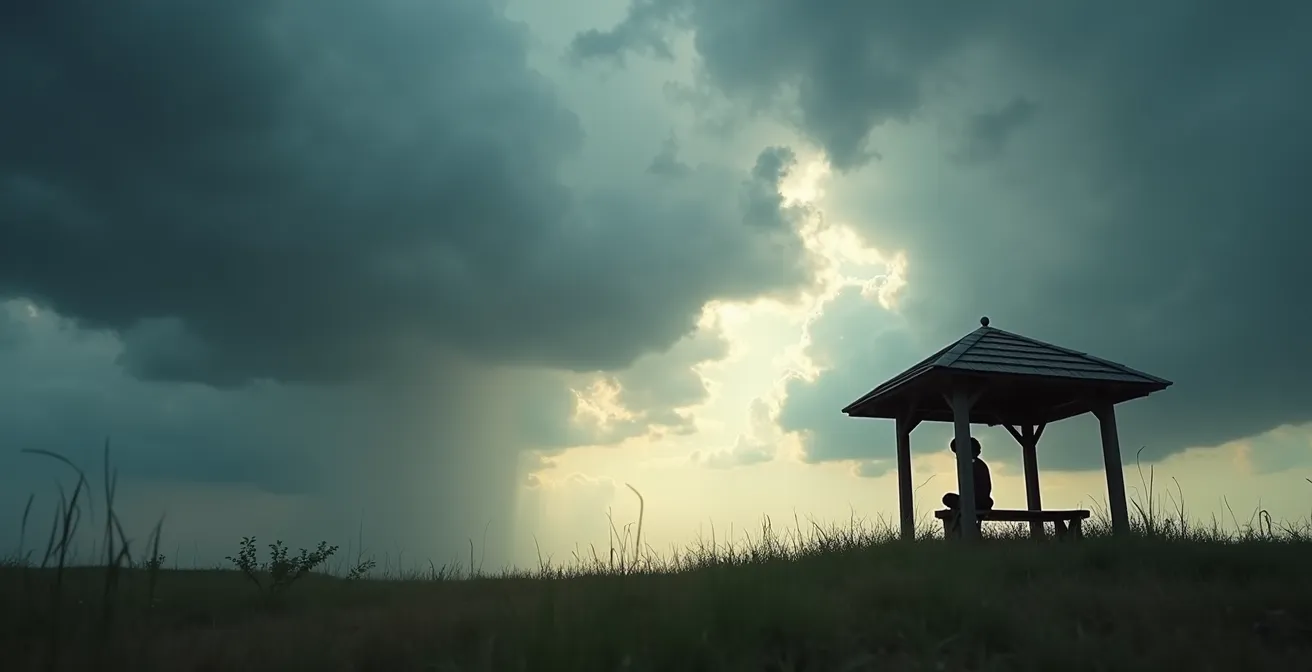
By creating a “weather feelings chart” that matches emotions to different weather patterns, you normalize the full spectrum of human experience. This practice helps your child build resilience, teaching them that they can weather their internal storms, just as the forest weathers its own.
The Wellness Wheel: How to Ensure You Hit All 5 Health Pillars?
A successful nature prescription is about more than just isolated activities; it’s about creating a balanced “diet” of experiences that nourish every aspect of your child’s being. The Wellness Wheel is a helpful model for this, breaking down health into five key pillars: Physical, Emotional, Social, Intellectual, and Spiritual. Nature is unique in its ability to engage all five pillars simultaneously, often within a single activity.
For example, a family hike is not just physical exercise. It’s an emotional bonding experience (emotional), a chance to interact with others (social), an opportunity to identify plants or follow a map (intellectual), and a moment to feel a sense of awe and connection to something larger than oneself (spiritual). This “stacking” of benefits is what makes green time so efficient and powerful for a child with ADHD, whose various needs can feel overwhelming to manage separately.
By consciously planning your weekly nature time, you can ensure you’re nurturing the whole child. Think about activities that target each pillar. A solo session of barefoot walking might be deeply spiritual and physical, while a group sport in a park is primarily social and physical. A trip to a botanical garden could be highly intellectual and emotional. The goal is not to do everything every day, but to achieve a healthy balance over the course of a week.
Here is a powerful tool to help you structure this. Think of it as your family’s weekly plan to ensure a well-rounded diet of nature’s benefits.
Your Weekly Nature Prescription Template
- Monday: 15-min morning barefoot time in garden (Physical/Spiritual)
- Tuesday: 20-min after-school nature sound hunt (Intellectual/Emotional)
- Wednesday: Identify 3 birds or plants on walk to school (Intellectual)
- Thursday: 30-min sunset family walk with gratitude sharing (Social/Emotional/Physical)
- Friday: Free nature play with friends (Social/Physical)
- Saturday: 1-hour family hike with nature photography (All 5 pillars)
- Sunday: Garden care or outdoor art project (Intellectual/Spiritual/Emotional)
Using this template as a guide, you can create a routine that feels less like a chore and more like a natural rhythm. It transforms the vague goal of “more outdoor time” into a concrete, achievable, and holistic plan for well-being.
Morning Sun: Why 10 Minutes Outside Resets Your Child’s Sleep Clock?
One of the most potent and underutilized tools for managing ADHD symptoms is morning sunlight. The timing is critical: exposure to direct, natural light within the first hour of waking triggers a powerful biological cascade that resets the body’s master clock, the circadian rhythm. This internal clock governs nearly every bodily process, including the sleep-wake cycle, hormone release, and, crucially, our ability to focus.
When light hits the retina in the morning, it sends a signal directly to the brain to suppress the production of melatonin (the sleep hormone) and trigger a healthy, gradual release of cortisol. This morning cortisol pulse is not the “bad” stress hormone; it’s an essential signal that promotes alertness, motivation, and focus. For many children with ADHD, their circadian rhythm is delayed or dysregulated, leading to difficulty waking, morning grogginess, and a struggle to “get their brain online” for school. A consistent dose of morning sun is the most effective way to anchor this rhythm correctly.
The effects are not just anecdotal. The power of this intervention is so significant that University of Illinois research demonstrates that just 20 minutes of morning nature exposure can be as effective as a dose of methylphenidate for temporarily improving concentration. This is your “nature Ritalin,” and it’s free. To be effective, the light must be unfiltered—not through a window. Even on a cloudy day, the full spectrum of natural light is vastly more powerful than any indoor lighting. Have your child step outside for just 10 to 15 minutes, without sunglasses, to let their brain receive this vital wake-up call.
This simple ritual can have a cascading positive effect throughout the day. A properly set circadian clock not only improves morning focus but also helps the body produce melatonin at the right time in the evening, leading to easier bedtimes and more restorative sleep—a virtuous cycle that is fundamental to managing ADHD.
Alarm Clock vs. Sunlight: Which Wake-Up Method Reduces Morning Anxiety?
How a child’s day begins sets the tone for their emotional and cognitive state for hours to come. A blaring, traditional alarm clock is one of the most jarring ways to start the day. It jolts the body from a state of sleep directly into a fight-or-flight response, causing a sudden, sharp spike in cortisol and adrenaline. For any child, this is stressful. For a child with an already sensitive or anxious nervous system, it’s like starting the day in a state of neurological panic.
This “alarm-induced stress” depletes a child’s precious emotional resources before they’ve even gotten out of bed. It makes them more emotionally reactive, less resilient to minor frustrations, and less able to access the higher-level brain functions needed for learning and social interaction. Waking up naturally with sunlight, or with a sunrise-simulating alarm clock, allows for a gentle, gradual transition into wakefulness. This preserves their emotional and cognitive reserves for the challenges of the day.
Starting the day in a state of alarm-induced stress makes a child more emotionally reactive and less resilient to challenges throughout the day. Waking naturally with light preserves their emotional resources for school, social interactions, and learning.
– Dr. Sandy Newmark, Lifestyle Changes with the Biggest Impact on Kids with ADHD webinar
The difference in the body’s response is stark. A natural wake-up supports a healthy, gradual rise in cortisol that promotes alertness without anxiety. An alarm-induced spike triggers a stress response that can lead to a “crash” a few hours later, tanking their focus just as they need it most at school. Choosing the right wake-up method is a powerful lever for reducing morning anxiety and setting your child up for a more focused, emotionally stable day.
A comparative analysis of wake-up methods shows a clear winner for children prone to anxiety.
| Wake Method | Cortisol Response | Anxiety Level | Focus Duration | Best For |
|---|---|---|---|---|
| Natural Sunlight | Gradual healthy rise | Low | 4-6 hours sustained | All children, especially anxious types |
| Sunrise Alarm Clock | Moderate gradual rise | Low-Medium | 3-4 hours sustained | Dark winter months, early school starts |
| Traditional Alarm | Sudden spike (fight/flight) | High | 1-2 hours, then crash | Emergency only, avoid regular use |
| Parent Wake-Up | Variable based on approach | Medium | 2-3 hours | Young children needing routine |
Key Takeaways
- Nature is not just a playground; it is an active therapeutic tool that can be ‘prescribed’ in specific doses to manage ADHD symptoms.
- Key physiological mechanisms include resetting the circadian rhythm with morning light, reducing inflammation via ‘earthing,’ and restoring focus through ‘soft fascination.’
- Tailoring the approach is crucial: use kinetic (movement-based) meditation for hyperactive children and prioritize unstructured nature time for burnt-out children to allow for cognitive recovery.
Overscheduled: Is Your Child Tired or Actually Burnt Out?
In our highly structured world, it’s common to see a child who is irritable, listless, and unable to focus and assume they are simply tired or bored. But often, especially in children with ADHD, these are the signs of something deeper: cognitive burnout. There is a critical difference between being tired, which is resolved with rest or sleep, and being burnt out, which stems from the complete depletion of one’s “directed attention” resources.
Directed attention is the kind of focus we use for schoolwork, following instructions, and navigating video games. It’s a finite resource. When it’s exhausted, the brain enters a state of protective shutdown. The mistake many parents make is trying to fill a burnt-out child’s “boredom” with more stimulating, screen-based activities. This is like trying to heal a strained muscle by making it lift more weights; it only makes the problem worse, as even “fun” screen time still requires directed attention.
The true antidote to burnout is engaging the brain’s other attention system: involuntary attention, or “soft fascination.” This is where unstructured time in nature becomes a non-negotiable prescription. A 2020 study highlighted this perfectly, finding that children who took nature walks showed significant reductions in rumination and negative mood, while urban walks had no benefit. The key was that nature gently captures attention without demanding effort, allowing the directed attention system to finally rest and recover. This is Attention Restoration Theory (ART) in practice.
How can you tell if your child is tired or truly burnt out? Use the “Unstructured Nature Test.” Take them to a natural space with zero agenda. A tired child will eventually start to explore or play. A burnt-out child will remain listless, irritable, or “bored,” even in a beautiful setting. This “boredom” is a vital sign that their brain is in a healing, low-power mode. The prescription is to allow it. Don’t fill the space. Let them be bored in nature. This is where true cognitive restoration begins.
Embracing the role of a nature therapist for your child is a journey of small, consistent steps. It’s about shifting your perspective from seeing nature as an occasional treat to viewing it as a daily, essential nutrient for your child’s brain. You now have the evidence and the tools to write your own nature prescriptions. Start with one thing, like the 10-minute morning sun ritual, and build from there. You have the power to help your child find their focus and calm, not by adding more to their schedule, but by reconnecting them to the restorative world that has been waiting for them all along.