Learning and development

The “Word Gap” Myth: It’s Not How Much You Talk, but How You Talk That Shapes Your Child’s IQ
The long-held belief in a “30-million-word gap” is misleading; conversational quality, not sheer quantity, is the real engine of a child’s cognitive growth. Interactive dialogue—specifically back-and-forth “conversational turns”—activates key brain regions for language far more than passive listening does. Strategic…
Read more
Hearing Before Seeing: Why You Can’t Read What You Can’t Hear
Contrary to popular belief, learning to read starts with the ears, not the eyes. A child’s ability to decode letters is built on a hidden foundation of auditory skills. Rhyming and syllable counting build the initial “auditory blueprint” for language….
Read more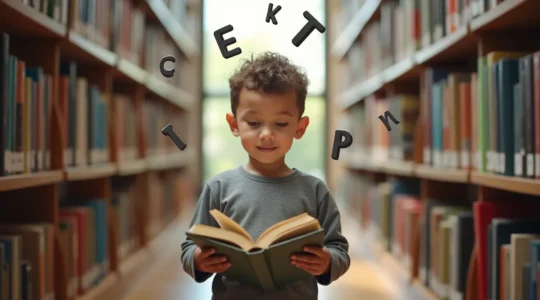
Sight Words vs. Phonics: Why Guessing Based on Pictures Is Not Reading
Contrary to popular belief, children do not learn to read by memorizing word shapes or guessing from pictures; they learn by building specific neural pathways that connect sounds to letters. The “three-cueing system” (guessing from context or pictures) trains the…
Read more
Sharing vs. Turn-Taking: Which Concept Should You Actually Teach?
In summary: Stop forcing the abstract concept of “sharing” on young children; it often backfires and creates more conflict. Teach “turn-taking” instead. It’s a concrete, rule-based skill that respects a child’s sense of ownership and reduces power struggles. Your role…
Read more
EQ vs. IQ: Why Emotional Skills Predict Success Better Than Grades?
For decades, parents have been told that academic achievement (IQ) is the primary key to a child’s success. The data now points to a different reality: Emotional Intelligence (EQ) is the true competitive advantage for the leaders of tomorrow. EQ…
Read more
Why Naps Are Crucial for Learning New Vocabulary in Toddlers?
Contrary to the belief that dropping naps is a normal developmental step, it actively disrupts the brain’s essential mechanism for learning language. Naps are not just for rest; they trigger “sleep spindles,” a specific brain activity that files new words…
Read more
How to Teach Delayed Gratification to a Preschooler Who Wants It Now?
Teaching a preschooler to wait isn’t a battle of wills to be won with rewards or punishment. The true key is to understand that impulsivity often stems from a dysregulated nervous system. This guide reframes the challenge: instead of commanding…
Read more